
First Impressions of the Fujifilm GFX 100S II: A Portrait Photographer’s Perspective
Gear Review
Today I want to share my first impressions of the Fujifilm GFX 100S II along with the GFX 55mm f/1.7 and the GFX 45-100mm lenses. I've had these lenses and camera for about two weeks and tested them in various scenarios, including portrait sessions, family photos, and even a shoot with a living legend. Let's dive in!
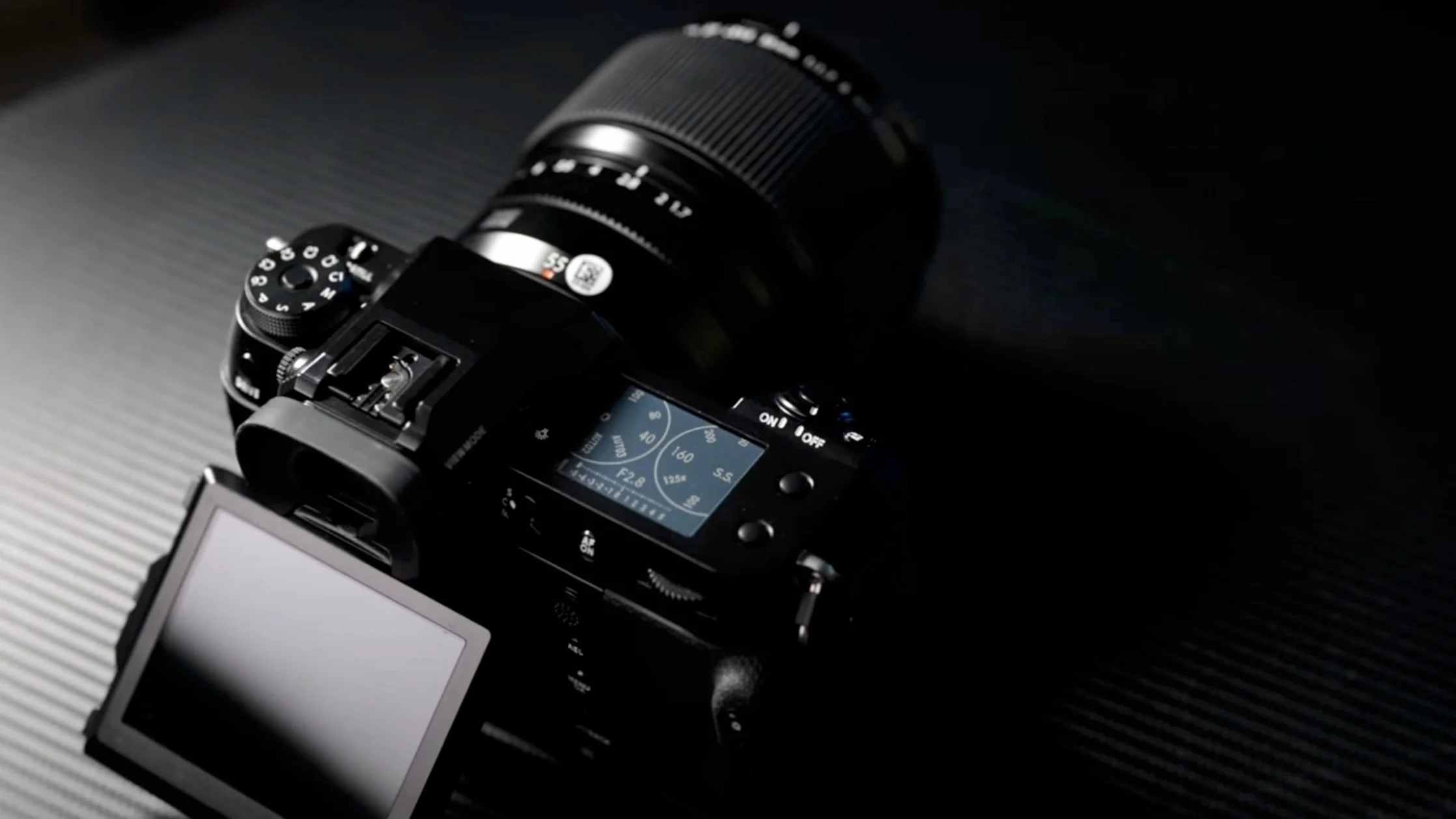
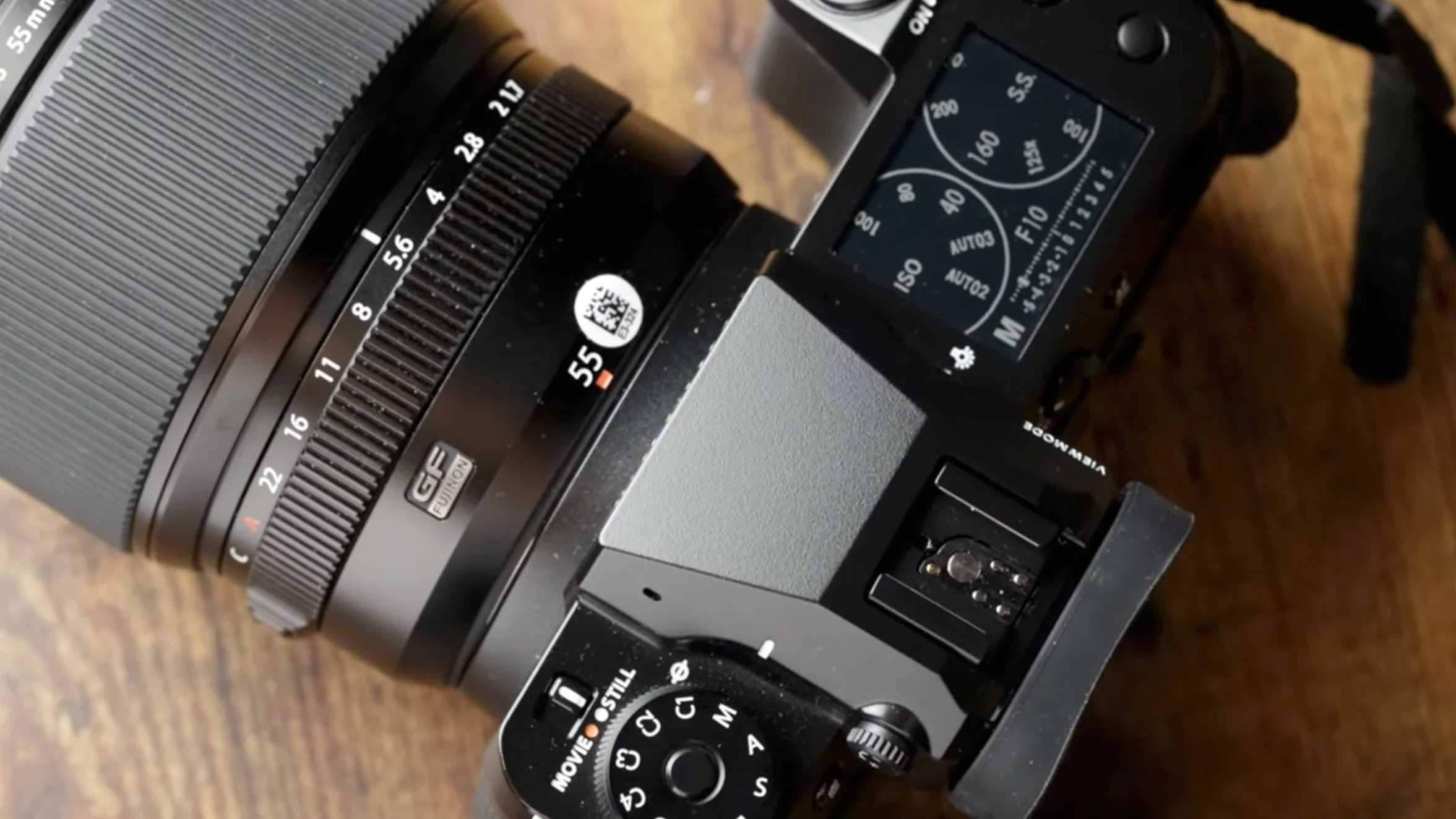
GFX 100S II with the 55mm f/1.7 (left), and with the 45-100mm lens (right)
Quick Take
Handling and Build Quality
The GFX 100S II is not small, but it's not overwhelmingly large either. It's comparable in size and weight to a full-frame mirrorless camera, which I found comfortable for handheld use. It feels more or less like a brick-ish full frame camera. With the 55mm f/1.7 lens, the camera was very easy to manage, and a lot of fun too. The deep grip made handling pretty much effortless, even when I took it around Manhattan for various shoots, with lighting gear in tow. The 45-100mm lens, however, is quite long, so when using it in this combination, it did feel sort of bulky, but that is more about the lens than the camera. The balance, with that larger lens, however, was still good. I think Fujifilm did a very nice job with this camera design, including the layout and buttons… mostly.
One of my continued gripes with Fujifilm is that they have a habit of changing button layouts between models and systems, which adds an unnecessary extra learning curve for photographers switching between cameras in their ecosystem. It would be so much better if the X and GFX cameras had the same layouts, without so much variation in the design as well as different or missing features. They do make up for it with the excellent ability to customize almost any button, and this definitely helps smooth the transition from one camera to another, but more consistency across models would be appreciated!

A portrait of jazz legend, bassist Ron Carter, taken with the Fujifilm GFX 100S II
Want to learn more about portrait photography and lighting?
The Portrait Community — Learn MoreAutofocus Performance: Better Than Expected
Let's talk about a crucial aspect for many photographers, especially us Fujifilm users—autofocus. I initially had rather low expectations for a number of reasons. First, Fujifilm's medium format cameras are, in general, slower than their APS-C cameras. The whole process, with the larger sensor and huge file sizes, takes a bit more time. Second, I tried out the GFX 100S II, although briefly, at a Fujifilm event in New York, and I found it to be slow. However, after using it in real-world situations for a number of weeks, I was pleasantly surprised by the autofocus, which was very good for a medium format camera.
For my portrait work, the AF was accurate, and locked onto the subject's eye without a lot of hunting or false positives. If you're coming from a Sony or Canon system, you'll still notice a big difference in the speed of the autofocus, which lags behind those brands in a big way. Still, for a medium-format camera, the performance was solid, and I didn't have a lot of missed shots. It's definitely faster than older GFX models.

Fujifilm GFX 100S II
Image Quality: Stunning Detail and Dynamic Range
The GFX 100S II shines when it comes to image quality. The files are 100MP, and excessively large to work with in post. But they are beautiful. And the GFX 100S II offers an insane amount of dynamic range, which I love for editing. You can edit the files quite a bit, and bring back detail in the shadow and highlight areas in a major way. Also, when shooting portraits with the 55mm f/1.7 wide open, the bokeh is creamy, and the subject separation is natural, with a pop that makes the subject really stand out.

GFX 100S II
Pros
Cons
Verdict: A Portrait Photographer's Dream Camera?
The Fujifilm GFX 100S II is a serious contender for portrait photographers. The combination of image quality, dynamic range, unparalleled detail, and Fuji's renowned color science, creates images that feel almost cinematic. The 100MP resolution is overkill for many, but if you want the ultimate in detail and tonal range, this camera delivers. If you work with large commercial brands and need the resolution however, this camera will surely dazzle and deliver for you.
Fujifilm GFX 100S II & Lenses